


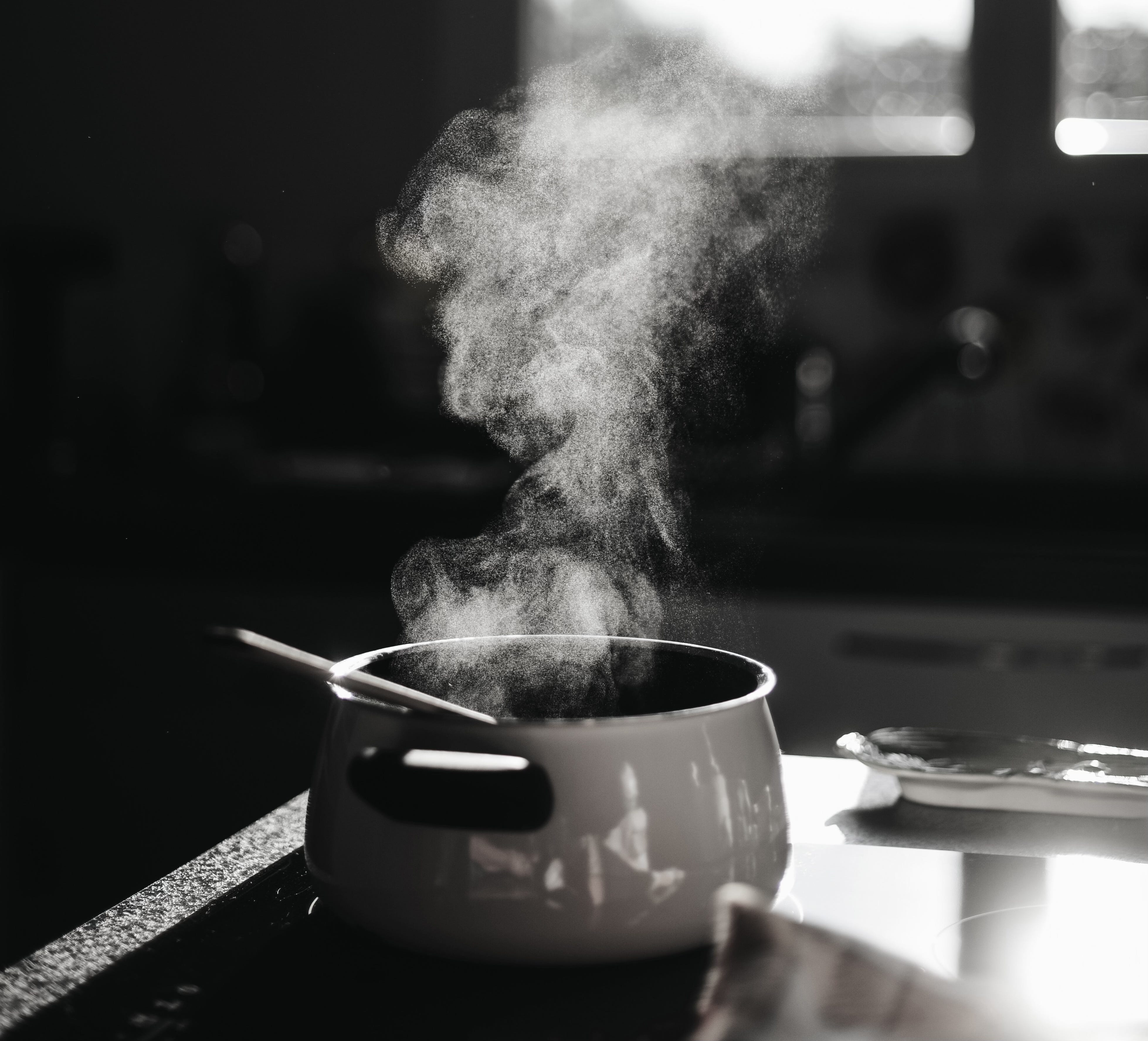
The sun beamed in through the windows adorned with frills, signaling the late morning of a crisp winter day, lemons dancing across the fabric, rumpled and pushed aside to let in the solar delight. The sunlight radiated across my back, causing me to arch and twist to gain better access to the source of heat. As I sat at the counter, wobbling in defiance against the weight of my body, I looked into the kitchen before me.
Steam rose from the stove, causing droplets to form on the vent above and fall back into the black-and-white speckled pot bubbling and boiling below. The smells filled my nose, scents that I had grown accustomed to: tomato, garlic, onion, hominy, cumin. Some unfamiliar scents sneaked their way in. Venison, perhaps? I felt my stomach rumble, filing its complaint.
The counter jostled as I leaned on its surface. The corners were mismatched; two rounded and two squared. The work of an amateur craftsman doing a favor for a friend. I ran my hands across both corners, wondering how long it had taken for anyone to notice this flaw. And admittedly, wondering if it really mattered.
I lifted my head, and there she was — a grandmother, a mother. Badges she wore. Her eyes held a quiet wisdom and her lips curved in a faint smile that spoke of both joy and weariness. She hummed a song under her breath, something like “You Are My Sunshine” that faded into John Lennon’s “Imagine” before looping back again. She reached for a mason jar, something thick and crimson inside, no doubt a substance she’d canned during the breezy summer months when winter was a mere folk tale for the future. But here we were, tucked inside, waiting out the frigid world beyond these walls.
The counter where I sat was its own oasis, a sight unseen, but right in the middle of it all. I could exist here quietly. Watching.
She reached behind, rubbing the small of her back, and her eyebrows furrowed. I took her in. Her hair, short and permed, seemed to sit perfectly atop her head. The thick glasses rested heavily on her nose, sliding ever so slightly. Her face sagged gently, lines adorning her cheeks. My eyes settled on her hands, her skin wrinkled not from the moisture of brewing her concoction, but from life. I looked down at my own hands, untouched by age — slender fingers, taut skin, not a sag or ripple in sight. Feeling uncertain about what time would do to me, I folded my hands and placed them in my lap.
The stamping of heavy feet rattled the temperamental counter.
He marched inside, burly like a lumberjack, making himself known with a boisterous, “I’m back!” He left the imprint of his shoes in snow on the tile as he moved into the kitchen. She didn’t lift her head, but her body loosened; her shoulders dropped. He kissed her head, and she looked up, rolling her eyes. Next, a kiss on her cheek, the corners of her lips turning upward. A kiss on the other cheek, and she smiled and lifted her face toward him. She giggled and pushed her hand against his chest, adorned with a thick red-and-green flannel to weather the storm outside. He adjusted his galluses playfully, and she shook her head, turning her attention back to the bubbling pot.
My heart stumbled as I watched her — a woman, radiant and soft. The ease with which she responded to his touch, the flirtatious tilt of her chin, the warmth of her laughter; these were new to my eyes.
The sun shifted, sliding further across the floor and into the crevices of the kitchen. Her eyes met mine across the space between us. Her smile was pure and filled with love. She gave the pot one final stir, wiped her hands on her apron, and turned to him with the same smile. A grandmother, a mother. A wife, a woman.